
Paul Thomas Anderson (PTA) has been one of the defining voices of American movie-making for close to 30 years. PTA has explored a wide range of characters, genres, time periods, and more. It is safe to say that he has never made the same movie twice. This year, PTA has released his 10th film, One Battle After Another. While the box office has been a point of contention with the movie, as it is his most expensive movie to date, there is no denying the near-universal praise that the film has received from critics and movie fans alike. Here is a list of the 10 PTA films ranked from worst to best, and let’s see where One Battle After Another lines up with the rest of his filmography.
10. Inherent Vice (2014)
Inherent Vice might come in last, but it is easily the funniest PTA has ever been. The film follows a private investigator in a hazy 70’s California. Adapted from a Thomas Pynchon novel of the same title, Inherent Vice can often come off as an incoherent story. As audience members, we just bounce back and forth between two plot lines, and characters come and go rather quickly.
Inherent Vice looks incredible and features a great performance from Joaquin Phoenix, and also one of Josh Brolin’s most underrated performances. When it comes down to it, aside from a few comedic moments, there just is not a whole lot of reason to return to Inherent Vice.
9. Hard Eight (1996)
Hard Eight is PTA’s directorial debut, and it is an impressive one, especially considering the filmmaker was in his mid-20s when it was filmed. It is a sign that someone has a lot of talent when they are able to land Samuel L. Jackson, Phillip Baker Hall, and Gwyneth Paltrow in their first film.
Hard Eight is far from perfect, though. Homage is something that PTA has always had in his films, but this is one that feels the most like a copy-and-paste of his influences. Many of the tracking shots and overall look of the film feel directly ripped out of Scorsese films. There is nothing inherently wrong with that, but it is clear that PTA is still trying to find his footing as a director. Hard Eight is a film that feels laid back in what it has to say, again, not a bad thing, it just makes the film one of PTA’s lesser projects.
8. The Master (2012)
The Master is probably the most mysterious film that PTA has made. The film follows a World War 2 veteran who finds himself at the center of a cult called The Cause. The film features two of the best performances from Philip Seymour Hoffman and Joaquin Phoenix.
The film explores masculinity in a post-World War 2 landscape, as Phoenix and Hoffman go back and forth in a bizarre friendship. Hoffman plays the leader of the cult, a person who is full of lies and deceptions. Phoenix plays a veteran who needs to find a purpose in life. The Master works as a fascinating puzzle movie, where you learn a bit more about the characters and the world they live in with every revisit.
7. Licorice Pizza
Licorice Pizza is the most straightforward film in this ranking. The film looks at the early 70s through a nostalgic lens. We follow a few months in the life of Gary Valentine, a teenage businessman and hustler. The film takes an episodic approach to its storytelling as if it were small stories from the youth of PTA.
Licorice Pizza is a fun watch with a charming supporting cast, but truthfully, that is about all the film has going for it. There is nothing wrong with that; in fact, it is quite successful at being exactly what it sets out to be. For a lot of fans of PTA, a bit more is expected.
6. Magnolia (1999)
Magnolia might not be the best film to come from PTA, but it is certainly a film that is taken for granted, because there is no way a major studio would ever take a risk with this type of movie in the year 2025. Magnolia has a large cast of characters all connected in some way, creating a narrative that feels like a web. Coming in at just over three hours long, Magnolia covers a lot of ground, and unfortunately, not all of it is engaging.
The first hour of Magnolia is a bit clunky with its pacing, and its audiences may struggle to be invested in the different stories being set up, even if they all get the time to shine during the second half. Magnolia’s second hour is one long feeling of dread as all the characters suffer from their actions. The score during the second hour looms over the characters and creates a wonderful feeling of tension; it is easily one of the highlights of the movie. The third hour wraps up the story in a way that will divide audiences depending on how open they are to the weirdness of the story.
PTA’s ambitions are always something worth respecting with any revisit of Magnolia, even if the movie does start to feel a bit too big for its own good.
5. One Battle After Another
One Battle After Another is the most recent entry in the PTA filmography. OBAA is the most expensive film to come from PTA and follows the story of an ex-revolutionary trying to get his daughter back. This is the first film from PTA that takes place in contemporary times in over 20 years. The film does a great job at showing what the modern world looks like. It is a timely film; there are few films that feel as important as this one does to the current social landscape.
Similar to There Will Be Blood, this most recent film feels like PTA working at a new register and mode of filmmaking he has yet to tap into. OBAA has some of the most interesting PTA characters to date. Hopefully, the film receives award recognition at the Academy Awards next year.
4. Phantom Thread
Phantom Thread is probably the most underrated movie in the PTA filmography. The film takes place in 1950s Europe as a well-respected dressmaker struggles in his relationship. The movie tackles themes of love and the hardships of marriage. It is one of the best-looking and sounding films of the 2010s.
In comparison to other films in the PTA catalogue, it is most like Punch Drunk Love. Both films follow a complicated and difficult man who meets a woman who causes the man to tailspin and reconsider who he is as a person. Both are twisted subversions of the romantic comedy drama, and both have an intriguing sense of mystery at their center.
3. There Will Be Blood (2007)
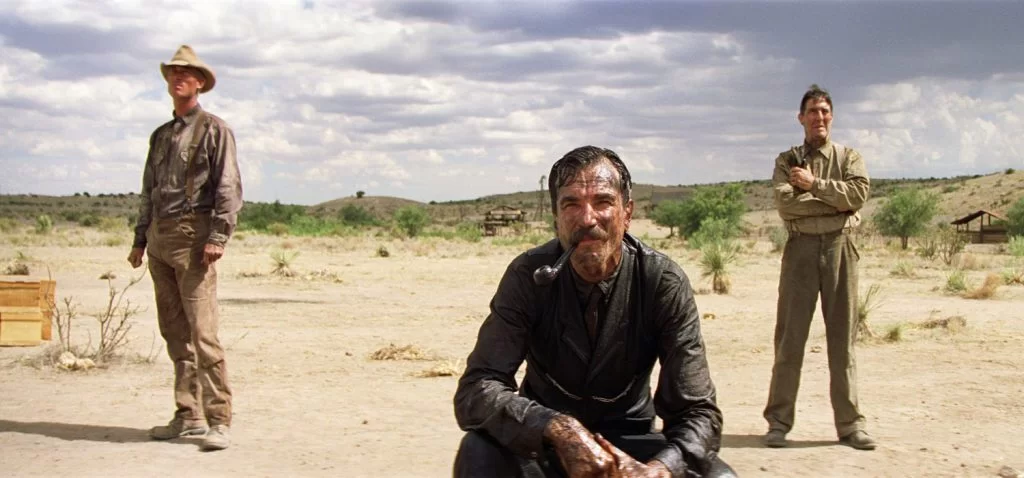
After making Punch Drunk Love, PTA took five years off from directing and came back with one of his most monumental films to date. There Will Be Blood, the story of a villainous oil tycoon, is a complete level up in the director’s ability to make a film. It is a film that feels different than any of his prior work. TWBB feels more mature in its characters, performances, and pacing. It handles its anger in a way that feels different than the likes of Magnolia and Boogie Nights. There is a more reserved nature to TWBB, but when it lets loose, the film starts moving at 100 MPH.
There is an easy argument to be made that TWBB is the most impressive film in the PTA filmography, but when it comes down to it, TWBB is not always the most rewatchable film he has made.
2. Punch Drunk Love (2002)
Punch Drunk Love comes at an interesting point in PTA’s career. It is right after the three-hour epic, Magnolia, and right before the movie that reinvigorates his career, There Will Be Blood. Compared to those two other films, Punch Drunk Love is a very simple movie about a socially awkward man who meets a woman and falls in love. It is the simplicity of the film that puts this in the number two spot of my ranking. It shows that PTA can make remarkable films, whether they are ensemble casts, an exploration of capitalism in America, or something as small as Adam Sandler collecting pudding cups from the store.
This film is also a major moment for Sandler. This shows that the actor has a bit more range than just playing Billy Maddison. There is something more complicated with Sandler, and it is on full display in Punch Drunk Love.
1. Boogie Nights (1997)
What is there to say about Boogie Nights that has not already been said? The movie is instantly iconic from the opening one-take shot that brings the audience through a nightclub, showing off most of the movie’s cast and introducing us to this morally skewed found family we will spend the next two and a half hours with.
There is a lingering sense of dread and melancholy throughout all of Boogie Nights. That feeling feels masked during the first half of the film, but when the story progresses into the 1980s, it becomes overwhelming. It creates a powerful and very real look at how addiction and false hope can break down a community.
Within the scope of PTA’s entire filmography, Boogie Nights might not feel as grand or lavish as something like There Will Be Blood or One Battle After Another, but there is an energy to the movie that makes Boogie Nights feel like something truly special.