
The 1990’s wave of crime thrillers feels like a special moment in Hollywood filmmaking. Movies like Seven (1995), acting as one of the most provocative films from that year, Heat (1995), which features a chaotic shoot-out and almost Shakespearian ending, and The Silence of the Lambs (1991), being one of the few films to win the big five awards at the Oscars. It is a period of reliable and exciting films, but then there is a movie like Joel and Ethan Coen’s Fargo (1996). Needless to say, Fargo feels different from the other films in its genre. Many of the previously mentioned films take place in big cities and feel rather theatrical in their scale, but Fargo is not interested in that.
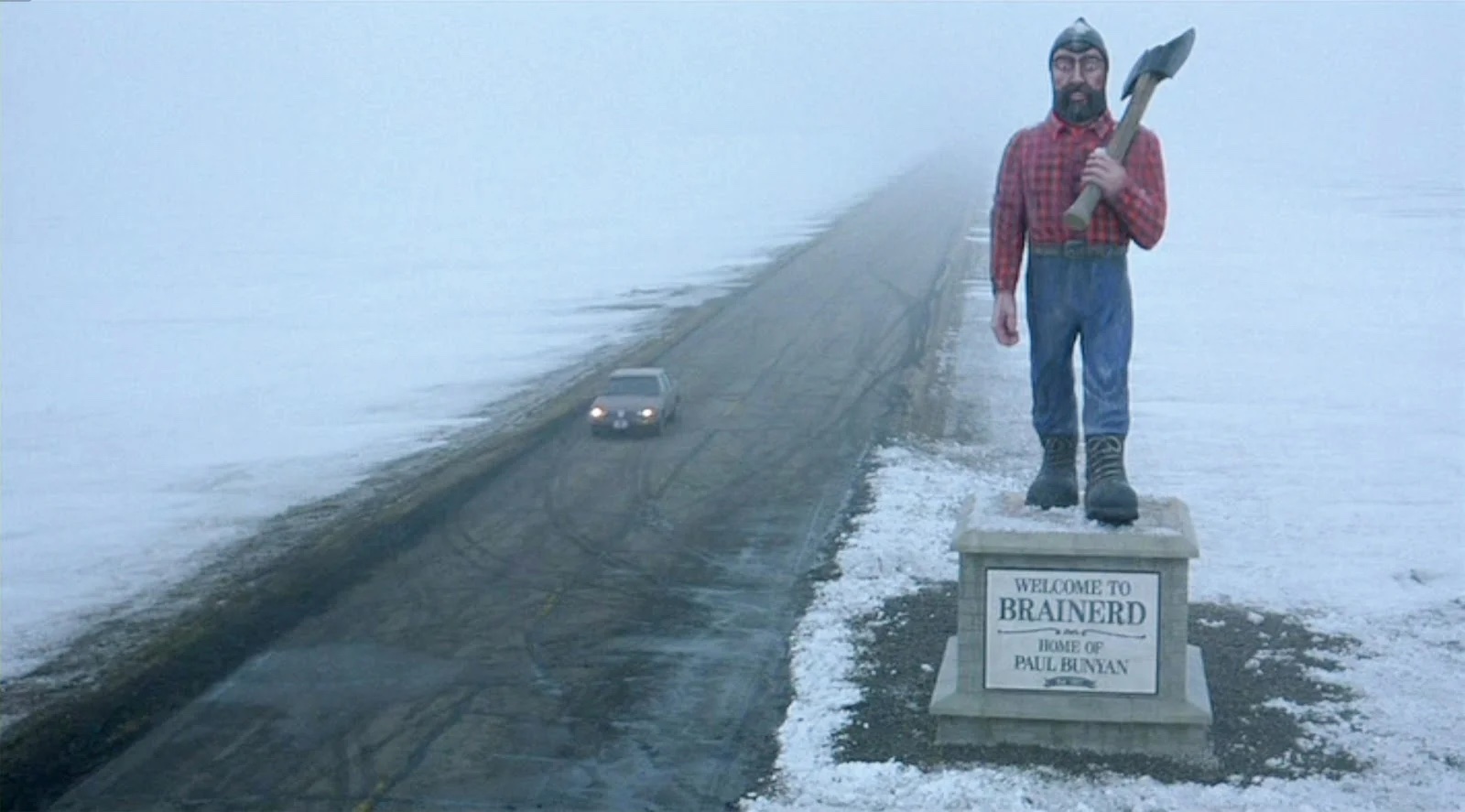
Fargo is interested in small-town America. The film takes its audience to a rather desolate, cold and snowy location in the Midwest. A setting that gives Fargo a unique storytelling angle when compared to other films in the same genre. We follow the story of Jerry Lundegaard (William H. Macy), a car salesman, trying to make a business deal. Jerry hires two henchmen (Steve Buscemi and Peter Stormare) to kidnap his wife, in hopes that Jerry’s father-in-law (who is also Jerry’s boss) pays the ransom. This way, Jerry can use the money to save himself from bankruptcy.
Based on this description, it would be safe to assume Jerry is the film’s protagonist, but after everything that can go wrong goes wrong, we are introduced to Marge Gunderson (Frances McDormand), a pregnant cop in this small town. One of the most interesting aspects of Fargo is the film’s structure as Marge doesn’t enter the frame of the story until the 34-minute mark of the movie. How many other 90s crime thrillers introduce the film’s main character at the start of the second act? It is a break in storytelling structure that would make any screenwriting professor lose their mind. It should not work, but it does, and it makes the movie better in doing so.
Fargo rides the line between realism and dark-comedy in a way that is always engaging for audience members. At points, the film is a rather cynical look at the endless cycle of random acts of violence. At other times, the film is interested in two henchmen having pancakes for the second time in one day. It both feels absurd and completely real at the same time, which is definitely benefited by the film’s opening blurb, which claims that the film is a true story. It is easy to imagine that in 1996, there was no other choice but to believe that the crazy, yet very human, events in Fargo could have happened in a small Midwest town.
The performances that the actors bring to Fargo are another highlight of the film. Most of the cast dons a somewhat exaggerated midwestern accent that gives the film a real sense of charm. The accents and way of speaking feel so inviting and safe, which makes the moments of violence all the more jarring. 30 years later, Fargo is one of those 90s movies that, no matter how many times you have thrown it on, always has something new to offer in its characters and small-town feeling.