
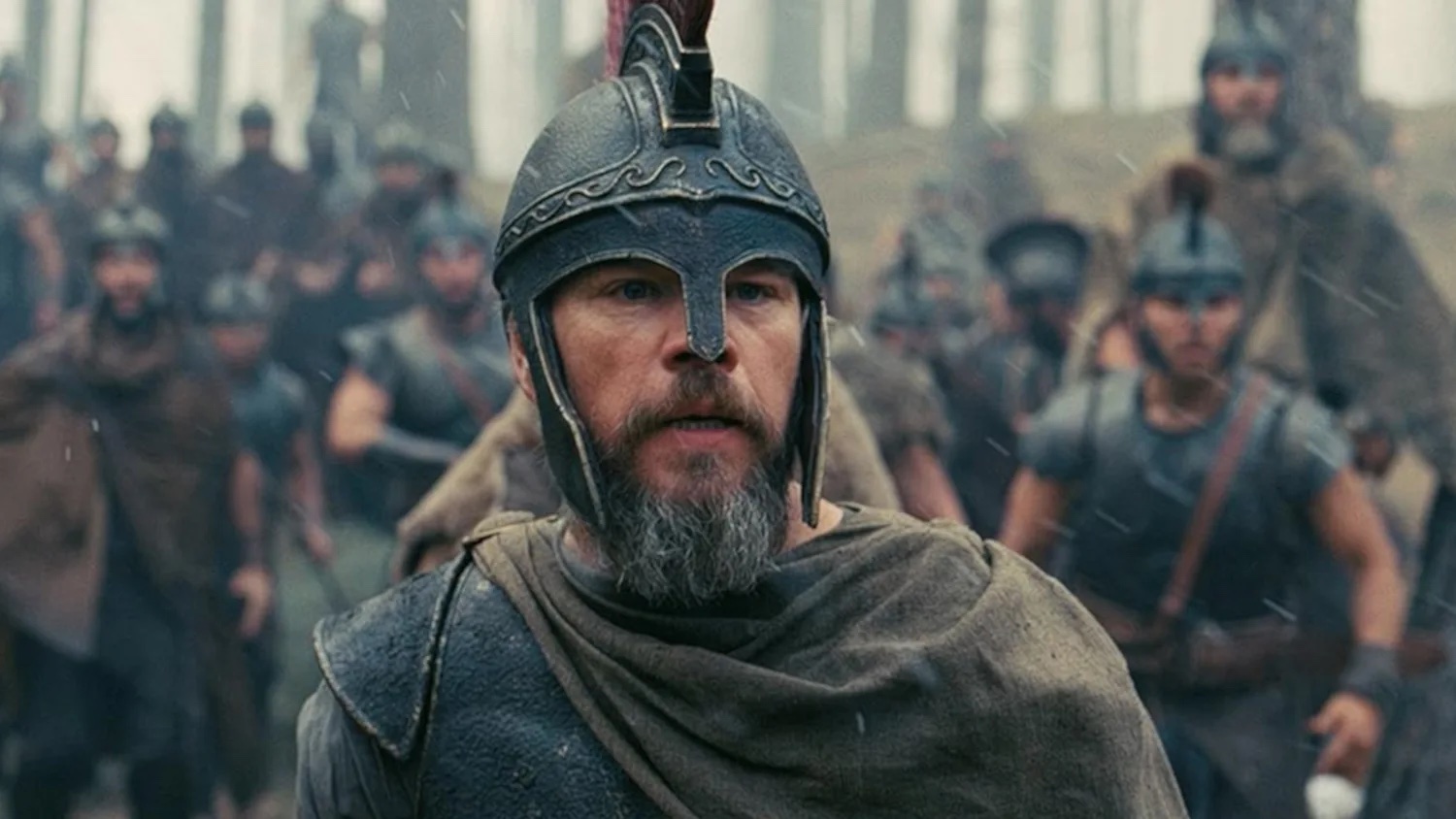
The Odyssey (2 1/2 stars out of 4)
Christopher Nolan’s “The Odyssey” is a good movie that should have been better.
Based on Homer’s epic poem of the same name–with some key bits of The Iliad thrown in for good measure–“The Odyssey” delivers in the areas you would expect from a Nolan film. The IMAX scale and cinematography are engaging, the battles are exciting, and the soundtrack from Ludwig Goransson has a way of ramping up the tension in key spots. As a three-hour piece of eye candy, “The Odyssey” isn’t bad as a summer blockbuster.
The premise: having won the Trojan War thanks to the help of a certain hollow wooden horse, King Odysseus (Matt Damon) sets out with three ships of weary warriors for the long journey home. But an unfortunate encounter with a cyclops during a rest stop offends Posiedon, the sea god, so the journey becomes beset by additional trials as a result. Giant warriors, some sirens, and in perhaps the film’s most memorable scene, a crafty witch (Samantha Morton) all chip away at Odysseus’s party, and the various adventures prolong the journey by years.
In the meantime, a host of suitors have been hounding the queen back home. Penelope (Anne Hathaway) has been waiting faithfully for the king’s return, but the long years are taking a toll, and pressure is mounting to take a new husband under the assumption that Odysseus has been killed. Her son Telemachus (Tom Holland) could inherit the throne from his father, so as a threat to the suitors, certain parties like Antinous (Robert Pattinson) are plotting to murder the heir.
True to Nolan’s form–though the source material may also have input here–“The Odyssey” is told out of sequence, mostly in flashback while Odysseus finds himself marooned and a little short of memory on an island with a woman named Calypso (Charlize Theron). This allows Nolan to include episodes from both of Homer’s books, and pack plenty of action sequences into the film’s three-hour run time, but strangely it also leaves you feeling as if you are only seeing highlight clips of the epic.
The bigger problem is Nolan’s decision to interpret the classic Greek myth with modern “sensibilities.” The film has earned controversy for certain casting choices, but the more problematic issue is the use of contemporary dialogue–especially some R-rated profanity that sounds completely out of place in a story that is supposed to be taking place 3,000 years ago. And without being more knowledgable with the original source material it is hard to say for sure, but this interpretation of Homer’s epic feels like it leans hard into modern fixations on hero deconstruction and existential malaise.
Another way to say it is that “The Odyssey” is mopey. Very, very mopey.
Throw in some spotty acting in a few key supporting roles, and “The Odyssey” feels like a big and brash blockbuster with some healthy room for improvement. For many audiences, its strengths will be more than enough, but the truth is that this should have been a better film, and it wouldn’t have taken much to get it there.
—
“The Odyssey” is rated R for scattered profanity, brief male nudity, and sequences of action violence (comparatively tame for an R-rating).