
Heart of the Beast (2 1/2 stars out of 4)
It may be best to know going in that “Heart of the Beast” is a dog movie. It isn’t essential in order to appreciate director David Ayer’s film, but it will account for a transition late in the film that feels awkward–and maybe even disappointing–on its own.
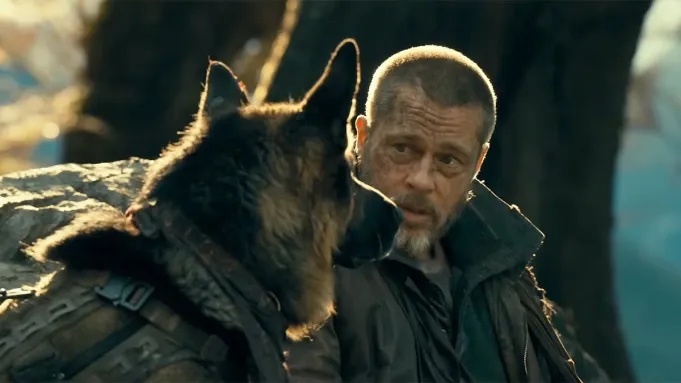
“Heart of the Beast” is a survival story about a pair of war veterans trying to make it out of the Alaskan wilderness following a plane crash. The first vet is James Belmont (Brad Pitt), a quiet and resourceful ex-Special Forces operative who has elected to spend his retirement as far away from civilization as possible. The second is his dog, a German Shepherd named Odin, who is also suffering from a life of active duty and the traumas of war.
We meet them in the middle of an excursion into remote Alaska, traveling from site to site in a small prop plane along with enough gear to set up a modest campsite. For the everyday outdoorsman, it feels like an idyllic life: fishing and camping and flying through a truly beautiful landscape, far from the hassles and distractions of the modern world. But nightmares and flashbacks suggest the origins of this routine continue to undercut their quest for peace, and when another lonely soul (J. K. Simmons) stumbles upon their excursion, the tension is palpable.
Soon after the rare social encounter, James is flying Odin to the next stop when a sudden heart attack leads to a crash in another nearby lake. The good news is that both parties survived; the bad news is that they are 50 miles from the nearest road, and that’s just the start of their troubles.
What follows is best summarized as, “one thing after another,” and as things go from bad to worse James is forced to employ all his skills to keep moving. At times the story feels a little like 2013’s “All is Lost,” which pitted Robert Redford’s lonely sailor against the ocean in a memorable solo performance, and Pitt’s effort is equally strong. But the presence of Odin is a helpful reminder that Man’s Best Friend will never let you truly be on your own.
As a metaphor for life’s often insatiable need to hammer you with trials and ordeals, “Heart of the Beast” is effective if not ground-breaking, and admittedly some of the more extreme perils (like the plane crash) feel like they are stretching believability a little too far. But the biggest problem is a protagonist shift late in the film that leaves the story feeling too empty for its own good.
Along with a lengthy narrative voiceover and some detailed pre-credits titles, “Heart of the Beast” concludes with the kind of explicit messaging that indicates the filmmakers didn’t think the audience would get the point otherwise. They may be right, but it undercuts the impact of the film, and leaves it feeling more like a public service announcement than a movie. As usual, it would have been better to show instead of tell.
—
“Heart of the Beast” is rated PG-13 for scenes of peril and some fairly gruesome gore.